
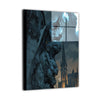
Batman Wall Art: The Collector's Guide
, 10 min reading time
, 10 min reading time
Batman produces the most visually distinctive wall art in the DC catalog because the character's visual identity is built around darkness, contrast, and atmosphere in a way that no other superhero matches.
Batman produces the most visually distinctive wall art in the DC catalog because the character's visual identity is built around darkness, contrast, and atmosphere in a way that no other superhero matches. The silhouette against a Gotham skyline, the cape spread wide, the cowl in shadow — these are compositions that work at any size and in any format. Metal is the strongest format for most Batman art because the precision and contrast of the dye-sublimated surface suits the character's dark aesthetic. Acrylic works for pieces with strong color and energy. Canvas works for the more atmospheric, painterly compositions.
✔ You prefer the darker, more grounded side of superhero storytelling — the detective, the tactician, the man who chose to become something the darkness fears.
✔ You're building a collector space with a darker, more cinematic aesthetic than the primary-color heroism of most Marvel art.
✔ You want a piece that works as a statement in a room without being loud about it — Batman art commands attention through atmosphere rather than spectacle.
✔ You're buying a gift for a DC fan who gravitates toward the street-level, psychologically complex side of the universe.
Batman's visual identity is built around contrast — the dark figure against a lit city, the cowl in shadow, the cape against a full moon. These are compositions that translate directly to wall art because they're already designed to be visually striking at a distance. The character doesn't need energy effects or transformation sequences to create visual impact. The silhouette alone is enough.
The Gotham setting adds another layer. Batman art isn't just about the character — it's about the city. Rain-soaked streets, gargoyle-lined rooftops, the Bat-Signal cutting through fog — the environment is as much a part of the visual identity as the costume. Pieces that capture Gotham as a character in its own right tend to be the most compelling Batman wall art.
The villain roster also contributes significantly. The Joker, Two-Face, Bane, Ra's al Ghul, Harley Quinn, Poison Ivy — Batman's rogues gallery is the strongest in comics, and villain pieces are a significant part of the Batman wall art catalog. The Joker in particular produces some of the most visually striking villain art in the DC catalog.
Thomas and Martha Wayne die in an alley in Gotham. Bruce Wayne, eight years old, makes a promise over their bodies. Everything that follows — the training, the costume, the war on crime — flows from that moment. The origin is the most well-known in comics and the emotional foundation of every Batman story. Pieces that reference the origin — the pearls, the alley, the young Bruce against the darkness — carry the full weight of that history.
Frank Miller's The Dark Knight Returns (1986) redefined Batman for modern audiences. An aging Bruce Wayne comes out of retirement in a dystopian Gotham, confronts a new generation of criminals, and ultimately faces Superman in a battle that defines what Batman is at his core — a man who refuses to accept the world as it is. The visual aesthetic of TDKR — heavy shadows, bold compositions, rain and lightning — has influenced every Batman story since and produces some of the most powerful Batman wall art. Metal is the format for TDKR-inspired pieces.
Alan Moore's The Killing Joke (1988) is the definitive Joker story and one of the most psychologically complex villain narratives in comics. The Joker's philosophy — that one bad day is all it takes to break anyone — is the most coherent villain motivation in the Batman catalog. Pieces inspired by The Killing Joke capture the Joker at his most dangerous and most visually distinctive. Metal suits these pieces for their dark palette and psychological intensity.
Bane breaks Batman's back over his knee in one of the most iconic images in comics history. The Knightfall arc is the story of Batman at his most vulnerable and his eventual return. Bane wall art — the mask, the venom tubes, the physical dominance — suits metal for its dark, brutal aesthetic. The Batman/Bane confrontation is one of a possible villain pairings in the DC catalog.
The No Man's Land arc — Gotham cut off from the rest of the world after a catastrophic earthquake — is the story that most clearly establishes Gotham as a character in its own right. The city in ruins, Batman holding it together through sheer will — pieces that capture this era have a weight and atmosphere that suits canvas for its warmth and texture, or metal for its cinematic precision.
Batman: The Animated Series (1992–1995) established the visual identity that most fans carry as their definitive Batman. The art deco Gotham, the simplified but expressive character designs, the noir atmosphere — BTAS is the version of Batman that defined the character for an entire generation. Pieces inspired by the animated series have a distinct visual character that suits acrylic for its color intensity and depth.
Metal: The primary format for most Batman art. The dark palettes, high contrast, and cinematic atmosphere of Batman's visual identity suit the precision of dye-sublimated metal better than any other format. TDKR pieces, Joker pieces, Bane pieces, and most Gotham skyline compositions belong on metal.
Acrylic: The right choice for pieces with strong color and energy — the Animated Series aesthetic, pieces with the Bat-Signal in full color, and compositions where the warmth and luminosity of acrylic suits the specific piece better than metal's cooler precision.
Canvas: Works for the most atmospheric, painterly Batman compositions — Gotham in fog, the cape spread against a full moon, pieces where warmth and texture suit the mood better than the intensity of acrylic or metal.
No Batman display is complete without considering the Joker. The Batman/Joker dynamic is the most analyzed relationship in comics — two figures who define each other, who can't exist without each other, who represent opposite responses to the same broken world. A Batman/Joker paired display is a recognizable two-piece setup in the DC catalog.
The Joker's visual identity is as strong as Batman's — the green hair, the white face, the purple suit, the smile that doesn't reach the eyes. Joker pieces suit metal for their dark palette and psychological intensity. The contrast between a Batman piece and a Joker piece — the dark knight and the chaos agent — creates a display that tells the full story of Gotham in two frames.
The Gotham Duality: Batman and Joker as the anchor pair — the detective and the chaos agent, the order and the entropy. Same format (metal), same size, flanking a central wall. a possible Batman display setup in the STG catalog.
The Dark Knight Wall: A large Batman silhouette piece as the anchor, with Gotham skyline or villain pieces as supporting art. The silhouette composition works at any size and creates a strong visual anchor for the room.
The Rogues Gallery: Multiple villain pieces — Joker, Bane, Two-Face, Harley Quinn, Ra's al Ghul — as a themed display. The Batman rogues gallery has the strongest visual coherence of any villain roster in comics. Metal across all pieces, consistent sizing, the full scope of Gotham's criminal world on one wall.
The Batman/Joker paired display is a recognizable two-piece setup.
The Dark Knight Returns aesthetic — heavy shadows, bold compositions, the aging Batman against a lightning-lit sky — is a recognizable visual style in the Batman catalog. Collectors who know the source material gravitate toward TDKR-inspired pieces because they carry the full weight of what the character represents.
Harley pieces work well in acrylic for their bold color palettes.
A Batman silhouette piece in metal for collectors who want the iconic, atmospheric version of the character. A Batman/Joker paired display for collectors who want the full dynamic of the character represented. A Dark Knight Returns-inspired piece for long-time fans who want the definitive version of the character.
Metal for most Batman art — the dark palettes, high contrast, and cinematic atmosphere of the character's visual identity suit metal's precision. Acrylic for pieces with strong color and energy, particularly Animated Series-inspired pieces.
24x36 for the anchor piece. Batman art rewards large formats — the atmospheric detail and compositional complexity become more visible as the piece gets larger.
No — STG produces fan art by independent artists. Every piece is clearly attributed to its artist and includes a fan art disclaimer. Fan art is not affiliated with or endorsed by DC Comics, Warner Bros., or AT&T.
Batman pieces span the full range of the character's visual history — comics, animated series, films. Dark Knight pieces specifically reference the Frank Miller aesthetic of The Dark Knight Returns — heavy shadows, bold compositions, the aging Batman. Both produce strong wall art; the choice depends on which version of the character resonates most with you.
Fan art by independent artists. Not affiliated with or endorsed by DC Comics, Warner Bros., or AT&T.

Open the product to see the current sizes, format choices, price, and display requirements.


