
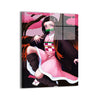
Demon Slayer Wall Art: The Collector's Guide
, 11 min reading time
, 11 min reading time
Demon Slayer has one of the most visually distinctive art styles in modern anime — and the breathing technique effects are the reason.
Demon Slayer has one of the most visually distinctive art styles in modern anime — and the breathing technique effects are the reason. Water breathing's flowing blue-white trails, Flame breathing's orange-red surges, Thunder breathing's yellow lightning — each technique has a visual identity that translates to wall art better than almost any other modern series. Acrylic is the strongest format for most Demon Slayer art because the breathing effects and bold color palettes benefit from the depth and luminosity of the format. Tanjiro and Rengoku are the strongest sellers in the catalog, but every Hashira produces compelling pieces for collectors who want to go deeper into the series.
✔ You watched Demon Slayer and were immediately struck by how visually spectacular the breathing technique sequences are — and you want that visual energy on your wall permanently.
✔ You're building an anime collector space and want the series that defined modern anime animation quality represented at the highest possible level.
✔ You want a piece that other anime fans immediately recognize and respond to — Demon Slayer's visual identity is among the most distinctive in the medium.
✔ You're buying a gift for an anime fan. Demon Slayer has one of the broadest fan bases in modern anime and the pieces that resonate most are immediately obvious to anyone who knows the series.
Demon Slayer's visual strength comes from a design decision that's unique in anime: the breathing techniques are not just power-ups — they're visual art forms. Each technique has a distinct color palette, a distinct movement pattern, and a distinct aesthetic identity. Water breathing flows in blue-white curves. Flame breathing surges in orange-red waves. Thunder breathing strikes in yellow-white lightning. Sound breathing creates concentric rings of force. Each technique is designed to be beautiful, and that beauty translates directly to wall art.
The character designs reinforce this. Tanjiro's hanafuda earrings and the scar on his forehead are immediately recognizable. Rengoku's flame-pattern haori is one of the most distinctive costume designs in modern anime. Inosuke's boar mask and bare chest create a visual identity that's unlike anything else in the medium. These are characters designed to be visually striking, and they produce wall art that rewards close attention.
The series also benefits from Ufotable's animation quality — the studio that produced Demon Slayer set a new standard for anime animation, and the visual language of the series reflects that standard. The breathing technique sequences are designed with the same care as the best action choreography in live-action film, and that care shows in the wall art that captures those moments.
Tanjiro Kamado's family is slaughtered by demons. His sister Nezuko survives but is turned into a demon herself. Tanjiro's journey — to find a cure for Nezuko, to become a Demon Slayer strong enough to protect her, to eventually face Muzan Kibutsuji — is driven entirely by the bond between a brother and sister. That bond is the emotional core of the series and the reason Tanjiro and Nezuko pieces carry more weight than a standard action pose.
Tanjiro's Water Breathing techniques are the visual anchor of the early series. Acrylic is the format that does these effects full justice — the depth and luminosity of the format makes the water trails read as actual movement rather than static color.
The Mugen Train arc — adapted into the highest-grossing anime film in history at the time of its release — is the moment that defined Demon Slayer for a global audience. Rengoku Kyojuro, the Flame Hashira, faces Akaza in a battle that ends in his death and his refusal to yield even in his final moments. "Set your heart ablaze" is the line that defines the character and the arc, and it's the reason Rengoku wall art carries emotional weight that goes beyond the visual spectacle of the Flame Breathing effects.
Rengoku pieces are the most emotionally resonant in the Demon Slayer catalog for fans who watched the Mugen Train arc. The Flame Breathing effects — orange-red surges, the flame haori, the intensity of the final battle — suit acrylic for their bold color and energy. The emotional weight of the character suits pieces that capture his final stand rather than just his power.
The Entertainment District arc introduced Tengen Uzui, the Sound Hashira, and the most visually spectacular arc in the series to that point. Sound Breathing's concentric rings of force, the neon aesthetic of the Yoshiwara entertainment district, and Tengen's twin blades create a visual identity that's distinct from every other arc in the series. Tengen pieces suit acrylic for their bold color and energy effects.
The Swordsmith Village arc introduced Muichiro Tokito (Mist Hashira) and Mitsuri Kanroji (Love Hashira) as major characters. Muichiro's Mist Breathing — ethereal, fast, almost invisible — creates a visual identity that's more atmospheric than most Demon Slayer techniques. Mitsuri's Love Breathing and her distinctive pink and green hair make her one of the most visually distinctive Hashira. Both characters produce strong wall art for collectors who want to go deeper into the Hashira roster.
The Infinity Castle arc is the climax of the series — the full Demon Slayer Corps against Muzan and the Upper Moons in the most visually spectacular sequence in the series. Every Hashira's techniques are on display. Every character's arc reaches its conclusion. Pieces from this arc capture the full scope of what Demon Slayer built toward and suit collectors who want the series represented at its peak.
The Hashira — the nine most powerful Demon Slayers — each have a distinct visual identity, a distinct breathing technique, and a distinct emotional resonance for fans who know the series. Building a display around the Hashira roster is one of the most compelling approaches in the Demon Slayer catalog.
Tanjiro Kamado (Water/Sun Breathing): The protagonist. Water Breathing's blue-white trails and the eventual Sun Breathing's golden warmth create two distinct visual identities across the series. a possible character in the catalog.
Rengoku Kyojuro (Flame Breathing): The Flame Hashira. Orange-red surges, the flame haori, the emotional weight of the Mugen Train arc.
Tengen Uzui (Sound Breathing): The Sound Hashira. Concentric rings of force, twin blades, the neon aesthetic of the Entertainment District. Bold and visually spectacular.
Muichiro Tokito (Mist Breathing): The Mist Hashira. Ethereal, fast, atmospheric. The most visually distinctive of the younger Hashira.
Giyu Tomioka (Water Breathing): The Water Hashira. Stoic, precise, the first Hashira Tanjiro encounters. Giyu pieces appeal to fans who appreciate the quieter, more controlled side of the series.
Inosuke Hashibira (Beast Breathing): The boar mask, the bare chest, the twin serrated blades. Inosuke's visual identity is unlike anything else in the series and produces wall art that's immediately recognizable.
Zenitsu Agatsuma (Thunder Breathing): Yellow lightning, the sleeping technique, the contrast between his cowardly personality and his devastating power. Zenitsu pieces capture one of the series' most beloved characters.
Acrylic: The default format for most Demon Slayer art. The breathing technique effects — water trails, flame surges, lightning strikes — benefit from the depth and luminosity of acrylic. The bold color palettes of the series read with exceptional intensity on the format. If you're buying one Demon Slayer piece, buy it in acrylic.
Metal: The right choice for darker compositions and Upper Moon demon pieces. The precision of metal suits the visual character of the series' antagonists — Akaza, Doma, Kokushibo — better than the warmth of acrylic.
Canvas: Works for more atmospheric compositions and softer character portraits. Less common in the Demon Slayer catalog because the series' visual language is built around energy and movement rather than warmth and atmosphere.
The Breathing Technique Wall: Multiple pieces each depicting a different breathing technique — Water, Flame, Thunder, Sound, Mist — as a themed display. The visual coherence of the breathing technique aesthetic creates a display that rewards close attention and tells the full story of the Demon Slayer Corps. All in acrylic, consistent sizing.
The Hashira Roster: One piece per Hashira, arranged as a gallery wall. The visual diversity of the Hashira designs — each with a distinct color palette, technique, and aesthetic — creates a display that's visually rich without being chaotic. This is the most ambitious Demon Slayer display approach and the most rewarding for fans who know the full series.
The Mugen Train Memorial: Tanjiro and Rengoku as the anchor pair — the student and the mentor, the survivor and the fallen. The emotional weight of the Mugen Train arc makes this the most personally meaningful two-piece setup in the Demon Slayer catalog.
A Tanjiro Water Breathing piece in acrylic for fans who want the protagonist at his most visually spectacular. A Rengoku Flame Breathing piece for fans who want the emotional weight of the Mugen Train arc. A breathing technique ensemble piece for fans who want the full scope of the series represented.
Acrylic for most Demon Slayer art — the breathing technique effects and bold color palettes benefit from the depth and luminosity of the format. Metal for Upper Moon demon pieces and darker compositions.
24x36 for the anchor piece. Demon Slayer art rewards large formats — the breathing technique effects become more visible and more spectacular as the piece gets larger.
No — STG produces fan art by independent artists. Every piece is clearly attributed to its artist and includes a fan art disclaimer. Fan art is not affiliated with or endorsed by Koyoharu Gotouge, Shueisha, or Ufotable.
Water Breathing pieces depict Tanjiro using the technique he learned from Sakonji Urokodaki — blue-white water trails, flowing movement. Sun Breathing pieces depict the original breathing style that Tanjiro eventually masters — golden warmth, solar imagery, the technique that connects him to his family's history. Both produce strong wall art; the choice depends on which era of Tanjiro's journey matters most to you.
Fan art by independent artists. Not affiliated with or endorsed by Koyoharu Gotouge, Shueisha, or Ufotable.


Open the product to see the current sizes, format choices, price, and display requirements.


