
One Piece Wall Art: The Collector's Guide
, 11 min reading time
, 11 min reading time
Choose the character and composition that mean the most to you, then compare the available finishes and sizes.
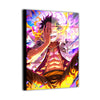
One Piece has the most expansive character roster in anime and produces wall art that rewards collectors who know the series deeply. Luffy is the anchor of the catalog — Gear 5 in particular has become one of a possible pieces in modern anime wall art because the visual identity of the form is unlike anything else in the medium. Zoro, Ace, and Trafalgar Law are the strongest supporting characters for wall art purposes. Acrylic is the default format for most One Piece art because the bold color palettes and energy effects of the series benefit from the depth and luminosity of the format.
✔ You've followed the Straw Hats across 1000+ episodes and want the character or moment that defined the series for you on your wall at the highest possible quality.
✔ You want a piece that signals to other One Piece fans exactly where you are in the series and which arc meant the most to you.
✔ You're building an anime collector space and want the longest-running anime in history represented — the series that has outlasted every trend and kept its audience for 25+ years.
✔ You're buying a gift for a One Piece fan. Know their favorite character before you buy — One Piece fans have strong, specific preferences and a generic Luffy piece misses the mark for someone whose favorite is Zoro or Law.
One Piece's visual strength comes from two sources: the diversity of its character designs and the visual spectacle of its power system. No two Straw Hats look alike. No two Devil Fruit abilities produce the same visual effect. The series has been running for 25+ years and has accumulated a roster of characters with visual identities strong enough to anchor a wall art piece independently.
The power system — Devil Fruits, Haki, the various forms of Gear — produces visual effects that are as distinctive as any in anime. Gear 5 Luffy's white hair and the cartoon-physics visual language of the Nika form is unlike anything else in the medium. Ace's fire. Law's Room and Shambles. Zoro's three-sword style and the black blade. Each power has a visual identity that translates directly to wall art.
The series also benefits from its emotional depth. One Piece fans don't just like the series — they've lived with it for years or decades. The pieces that resonate most are tied to specific moments that carry personal weight: Ace's death, Zoro's sacrifice at Thriller Bark, Luffy's breakdown after Marineford. That emotional weight makes One Piece wall art more personally meaningful than most anime series.
Monkey D. Luffy starts the series as a rubber-bodied kid with a dream of becoming King of the Pirates. His journey across 25+ years of storytelling ends — or approaches its end — with the revelation that his Devil Fruit is not the Gum-Gum Fruit but the Human-Human Fruit, Model: Nika, the Mythical Zoan that makes him the Sun God. Gear 5 Luffy — white hair, white outfit, the cartoon-physics visual language of the Nika form — is the most visually distinctive transformation in the series and one of a possible pieces in modern anime wall art.
The evolution of Luffy's visual identity across the series gives collectors multiple distinct versions to choose from: the original Gear 2 steam, Gear 4 Boundman's inflated musculature, and Gear 5's white-and-gold cartoon energy. Each version suits a different collector depending on which era of the series matters most to them.
Roronoa Zoro is a recognizable character in the One Piece catalog after Luffy, and for many collectors he's the first choice. His promise to Luffy — that he will never lose again — and his promise to Kuina — that one of them will become the world's greatest swordsman — are the emotional anchors of his character. The three-sword style, the black blade Enma, the scar across his eye, the moment at Thriller Bark where he absorbs all of Luffy's pain — these are the images that define Zoro for collectors who know the series.
Zoro pieces work well in both acrylic and metal depending on the specific composition. The three-sword style with energy effects suits acrylic. The more stoic, commanding poses — Zoro standing over a defeated enemy, the black blade drawn — suit metal for their precision and contrast.
Ace's death at Marineford is the most emotionally devastating moment in One Piece history and the event that defines Luffy's journey through the New World. The fire fist, the Whitebeard Pirates tattoo, the freckles — Ace's visual identity is immediately recognizable to any One Piece fan. Ace pieces carry the weight of his death and the love between brothers that made it so devastating. These are among the most personally meaningful pieces in the One Piece catalog.
Ace pieces work well in acrylic for the fire effects and in metal for the more atmospheric, memorial compositions. Collectors who buy Ace pieces tend to be the most emotionally invested in the series.
Trafalgar Law is a recognizable non-Straw-Hat character in the One Piece catalog. His Room ability — the blue sphere that allows him to rearrange anything within it — creates a distinctive visual identity that suits acrylic for its color intensity. His alliance with Luffy, his history with Doflamingo, and his role in the Dressrosa arc make him one of the most narratively complex characters in the series. Law pieces appeal to collectors who want the morally ambiguous, strategically complex side of One Piece represented.
One Piece's power structure — the Seven Warlords of the Sea, the Four Emperors — produces some of the strongest villain and anti-hero wall art in the catalog. Dracule Mihawk, the world's greatest swordsman and Zoro's ultimate goal. Shanks, the Emperor who inspired Luffy. Kaido, the strongest creature in the world. Big Mom, the matriarch of Totto Land. Each figure has a visual identity strong enough to anchor a wall art piece independently.
Shanks pieces are particularly requested because of his role as Luffy's inspiration and the mystery that surrounds him through most of the series. The red hair, the straw hat, the missing arm — Shanks' visual identity is as strong as any character in the series despite his limited screen time.
Gear 5 is the transformation that redefined One Piece for modern audiences. The white hair, the white outfit, the cartoon-physics visual language of the Nika form — it's a visual identity that's unlike anything else in anime. The Gear 5 awakening sequence is one of the most visually spectacular moments in the series and produces wall art that captures the full scope of what Luffy has become. Acrylic is the format for Gear 5 pieces — the white-and-gold color palette and the energy effects of the form benefit from the depth and luminosity of the format.
Acrylic: The default format for most One Piece art. Gear 5 Luffy, Ace's fire fist, Law's Room, Zoro's energy effects — the bold color palettes and power effects of the series benefit from acrylic's depth and luminosity.
Metal: The right choice for stoic character poses, villain pieces, and compositions with dark palettes. Zoro's commanding poses, Mihawk's black blade, Kaido in his dragon form — the precision of metal suits these pieces better than the warmth of acrylic.
Canvas: Works for atmospheric compositions and the quieter character moments. The Going Merry sailing into a sunset, the Straw Hats assembled on deck — pieces that capture the adventure and warmth of the series rather than the power and spectacle.
The Straw Hat Crew: Multiple Straw Hat characters as a themed display — Luffy, Zoro, Nami, Usopp, Sanji, Chopper, Robin, Franky, Brook, and Jinbe assembled. The visual diversity of the crew designs creates a display that's rich without being chaotic. This is the most ambitious One Piece display approach and the most rewarding for fans who love the full crew.
The Captain and the Swordsman: Luffy and Zoro as the anchor pair — the captain and his first mate, the two characters who define the Straw Hats' identity. Same format, same size, the partnership that anchors the series in two frames.
The Brothers: Luffy and Ace as the anchor pair — the bond between brothers, the promise, the loss. The most emotionally resonant two-piece setup in the One Piece catalog. Acrylic for Ace's fire, matched with Luffy's Gear 5 or a Marineford composition.
The Swordsman's Journey: Multiple Zoro pieces depicting his progression — from the three-sword style of the East Blue through Enma and the black blade. A display that tells the story of a promise kept across 25 years of storytelling.
Gear 5 Luffy has become a possible single piece in the modern One Piece catalog — the visual identity of the form is distinctive enough that collectors who haven't bought One Piece art before will buy a Gear 5 piece.
The emotional weight of the character drives purchase decisions more than any other One Piece character.
Law is a recognizable non-Straw-Hat character, with a collector audience that skews toward fans who appreciate the strategic, morally complex side of the series.
Gear 5 Luffy in acrylic for collectors who want the most visually distinctive version of the protagonist. Zoro with the three-sword style for collectors who prefer the swordsman. Ace's fire fist for collectors who want the emotional weight of the series represented.
Acrylic for most One Piece art — the bold color palettes and power effects of the series benefit from the depth and luminosity of the format. Metal for stoic character poses, villain pieces, and compositions with dark palettes.
24x36 for the anchor piece. One Piece art rewards large formats — the power effects and compositional complexity become more visible as the piece gets larger.
No — STG produces fan art by independent artists. Every piece is clearly attributed to its artist and includes a fan art disclaimer. Fan art is not affiliated with or endorsed by Eiichiro Oda, Shueisha, or Toei Animation.
Gear 4 Boundman pieces depict Luffy in his inflated, steam-covered muscular form — the transformation that defined the Dressrosa and Whole Cake Island arcs. Gear 5 pieces depict the Nika awakening — white hair, white outfit, the cartoon-physics visual language of the Sun God form. Both produce strong wall art; Gear 5 is the more visually distinctive and the more requested in the current catalog.
Fan art by independent artists. Not affiliated with or endorsed by Eiichiro Oda, Shueisha, or Toei Animation.

Open the product to see the current sizes, format choices, price, and display requirements.


